# Growing Herbs in Containers
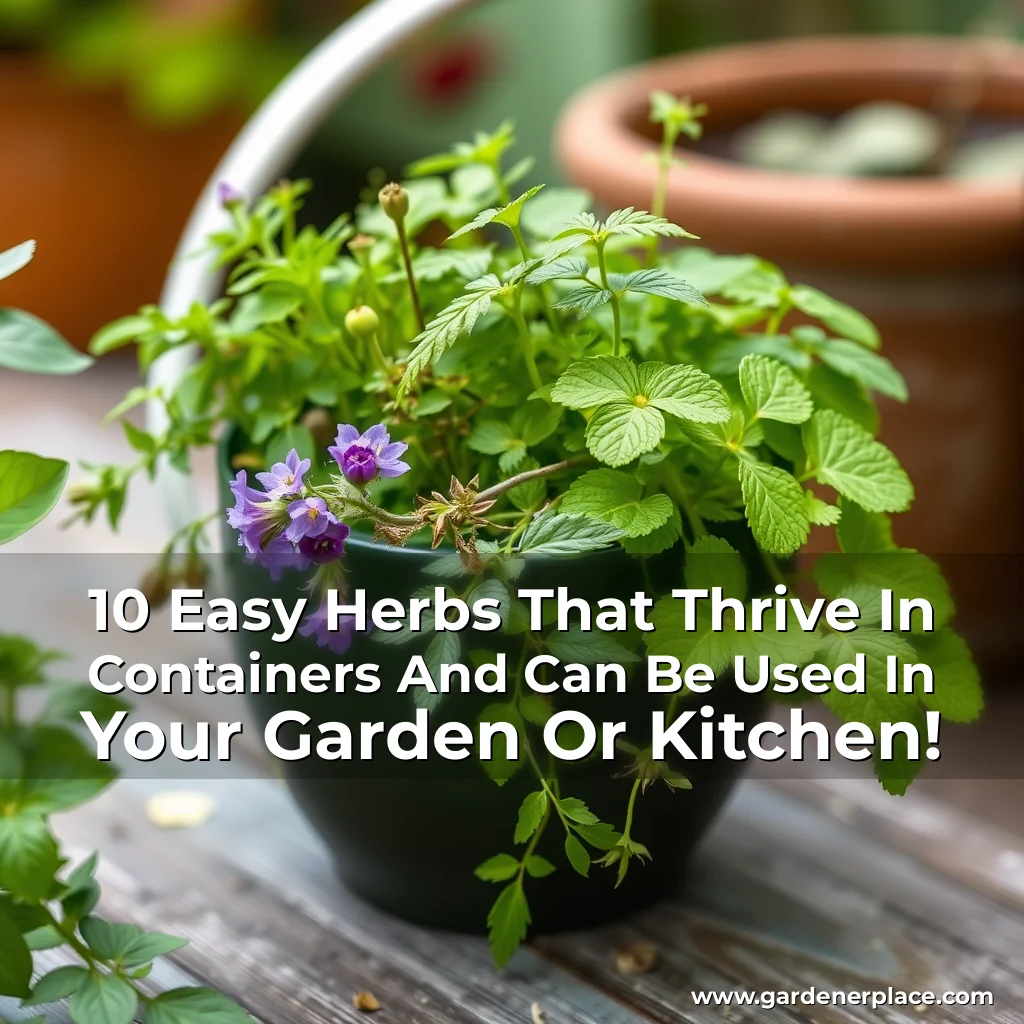
Growing herbs in containers is an excellent way to start your herb garden and get the most out of your kitchen. Not only do herbs in containers allow you to discover which herbs you use most often, but they also let you control the growing conditions and keep them close to your kitchen or patio. To be successful, you’ll need to choose a container that drains well and has enough room for the roots to grow. ###
Choosing the Right Containers
When selecting containers for your herb garden, consider the following factors:
- Size: Select containers that are large enough to provide enough room for the roots to grow, but not so large that they dry out quickly and cause the plants to wilt.
- Drainage: Make sure the containers have good drainage holes to prevent waterlogged soil.
- Material: Choose containers that are made from a breathable material, such as terra cotta or wood, to prevent moisture buildup.
###
Soil and Planting
To create a successful herb garden, you’ll need to choose a good soilless potting mix that holds moisture while providing good aeration. A well-draining potting mix will help prevent waterlogged soil and root rot. When planting herbs in containers, make sure to:
* Plant herbs in separate pots or artistically plant them in a mixed container. * Choose plants with similar light and water needs to ensure they thrive. * Water herbs regularly, but avoid overwatering. ###
Popular Herbs for Container Gardens
Here are some popular herbs that grow well in containers:
- Basil: An annual herb that is easy to grow from seeds and requires full sun and well-draining soil.
- Parsley: A biennial herb that can be grown from seedlings and prefers partial shade and moist soil.
- Sage: A perennial herb that prefers well-draining soil and full sun, but can be sensitive to high heat and humidity.
- Rosemary: An evergreen shrub that prefers well-draining soil and full sun, but can be sensitive to cold temperatures.
- Thyme: A perennial herb that prefers well-draining soil and full sun, but can be sensitive to heat and humidity.
- Chives: A perennial herb that prefers moist soil and partial shade.
- Oregano: A perennial herb that prefers well-draining soil and full sun.
- Lemongrass: A herbaceous perennial that prefers moist soil and partial shade.
- Mint: A herbaceous perennial that prefers moist soil and partial shade.
- Lavender: A perennial herb that prefers well-draining soil and full sun.
###
Tips and Tricks
* Harvest herbs regularly to encourage bushy growth and prevent flowering. * Use a trellis or other support for climbing herbs like rosemary and mint. * Divide and replant herbs to propagate new plants and keep them healthy. * Use a well-draining potting mix and avoid overwatering. * Prune herbs regularly to maintain shape and promote healthy growth.
“Growing your own herbs is like having a little piece of the garden in your kitchen. It’s a great way to add some fresh flavor to your cooking and enjoy the benefits of homegrown herbs.” – Anonymous
“Growing your own herbs is like having a little piece of the garden in your kitchen. It’s a great way to add some fresh flavor to your cooking and enjoy the benefits of homegrown herbs.” – Anonymous
By following these tips and choosing the right containers, you’ll be well on your way to growing a thriving herb garden in containers. Happy growing!

news is a contributor at GardenerPlace. We are committed to providing well-researched, accurate, and valuable content to our readers.